How to Clean a Greasy Range Hood Filter in 2026?

Time:2026-11-22 Author:Oliver
0%

A range hood filter works quietly, catching airborne grease before it settles on cabinets and walls. Over time, its metal mesh can turn tacky, darken, and collect dust around the edges. A clogged filter may also restrict airflow, so regular cleaning is a practical part of kitchen maintenance. Knowing how to clean a greasy range hood filter starts with identifying its material and checking the manufacturer’s care instructions. Many metal filters can be soaked and washed, but some parts or finishes need gentler treatment. Turn off the hood and let the filter cool before removing it. Handle sharp edges carefully. A little caution helps.

This guide covers a straightforward cleaning routine for 2026, from removing loose debris to soaking and rinsing the filter. Hot water and dish soap may loosen ordinary cooking grease; heavier buildup can require a suitable degreaser, used according to its label. Avoid mixing cleaners, and do not assume every filter is dishwasher-safe. The instructions matter. You’ll also learn how to dry and reinstall the filter, then spot signs that cleaning alone may not be enough. A greasy sink and a lingering soap smell are easy to overlook, so rinse thoroughly and check the mesh in good light. The process is not glamorous, and it can take more time than expected. Still, careful cleaning can help keep the hood working as intended.
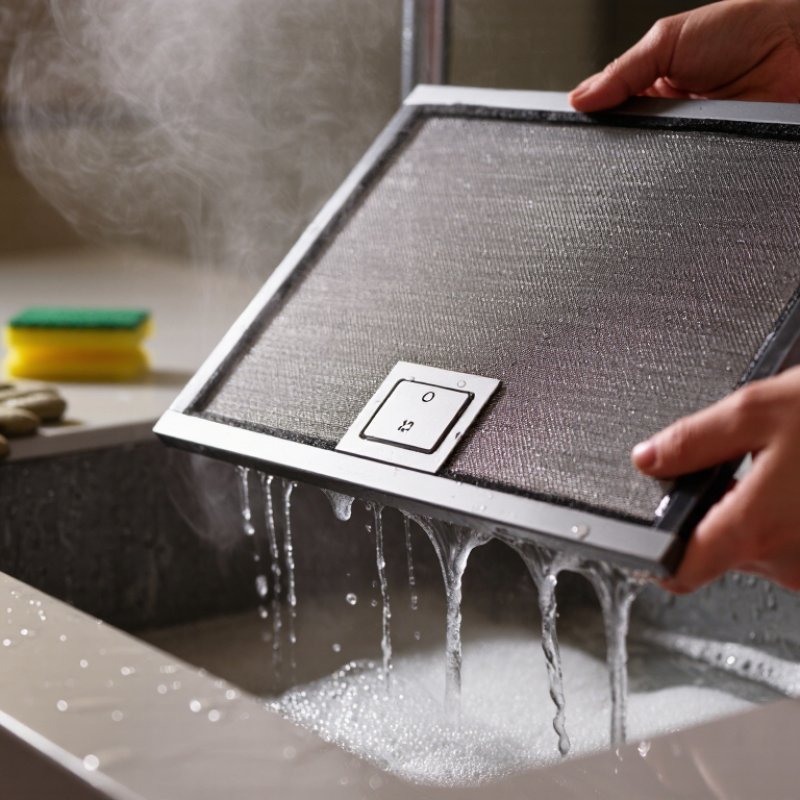
How to Clean a Greasy Range Hood Filter in 2026?

Identify the Range Hood Filter Type and Check Its Care Instructions

How to Clean a Greasy Range Hood Filter in 2026?

A greasy filter may look straightforward, but its material determines how to clean it safely. Switch off the hood and let it cool. Remove the filter gently, noting which way it faces. Aluminum mesh filters have fine layers that can bend; baffle filters have sturdy metal channels. A charcoal filter, often used for recirculating air, may look similar but usually needs replacement rather than washing.

Check the hood’s manual or the care label before using water, detergent, or a dishwasher. Some metal filters are dishwasher-safe; others may discolor or deform. If the instructions are missing, look up the hood’s model information or contact a qualified service professional. Avoid assuming that every metal-looking part is washable. A filter assembly can contain more than one material, and I would rather pause than damage it.

Tips: Take a clear photo before removal. Soak washable metal filters in warm water with mild dish soap, then use a soft brush on visible grease. Rinse and dry them fully before reinstalling. Skip harsh cleaners unless the care instructions approve them. Don’t force a stuck filter; check its release tabs again.

Gather Supplies and Prepare a Safe Cleaning Area

Before cleaning a greasy range hood filter, check the hood’s manual for removal instructions and filter type. Turn the hood off and let the cooktop and filter cool completely. If the unit has a plug, unplug it; for hardwired models, do not handle electrical parts. Clear a nearby counter, protect it with an old towel, and keep children and pets away. A little preparation prevents slippery drips from spreading.

Gather warm water, dish soap or a suitable degreaser, a basin large enough for the filter, a soft brush, and rubber gloves. Avoid abrasive pads, which can damage delicate mesh. Some charcoal filters are not washable, so verify care instructions before soaking anything. The detail is easy to miss.

Tips: Keep the cleaning area ventilated, and never mix cleaning products. Set a second towel aside for the filter after rinsing. If the filter does not fit in your basin, use a clean sink instead. I would rather make two careful arrangements than balance a greasy filter over the floor; it still feels like an awkward job, even with everything ready.

How to Clean a Greasy Range Hood Filter in 2026? — Gather Supplies and Prepare a Safe Cleaning Area

Use this suggested checklist for one cleaning session: gather four cleaning supplies, two personal-protection items, three items to protect the work area, and a screwdriver only if needed to remove the filter. Turn off the hood, let it cool, protect the cooktop, and check the manufacturer’s instructions before cleaning.

Remove the Filter and Loosen Grease with a Suitable Cleaner

Turn off the range hood and let it cool before removing the filter. If the unit has a removable plug, disconnect it; otherwise, keep the controls off. Check the manual for the filter-release method, since clips and sliding tabs vary. Set a towel on the counter. Grease drips easily.

Place the filter in a sink or shallow basin, then apply a cleaner labeled safe for its material. Warm water and dish soap often work for routine buildup; a suitable kitchen degreaser may help with thicker residue. Follow the product directions and avoid mixing cleaners. Let the filter soak for 10 to 15 minutes, unless its instructions recommend otherwise. I’ve found that rushing this part usually means more scrubbing.

Use a soft brush to work along the mesh, especially around the frame and corners. Don’t press hard: delicate mesh can bend, and that is easy to miss until the filter no longer sits flat. Rinse thoroughly with warm water, then inspect it against the light. Still tacky? Repeat the soak rather than scraping with a sharp tool. Dry the filter completely before reinstalling it, and check that it clicks or slides securely into place.

Rinse, Inspect, and Dry the Filter Thoroughly

How to Clean a Greasy Range Hood Filter in 2026?
Rinse, Inspect, and Dry the Filter Thoroughly

Switch off the hood and let the filter cool before removing it. Check the care instructions: some charcoal filters are replace-only, while many metal filters can be washed. The National Fire Protection Association’s Home Cooking Fires report found cooking equipment involved in 49% of U.S. home structure fires from 2017 to 2021. That figure is not specific to dirty filters, but it underscores why routine kitchen maintenance matters.

Soak a washable filter in hot water with dish soap or a suitable degreaser. Follow the product directions, and avoid harsh oven cleaners that may damage the mesh or finish. Gently loosen residue with a soft brush, especially around the frame and corners. Rinse both sides until the water runs clear and no suds remain. Rinse again if needed.

Inspect the mesh against a bright light. A clean-looking filter can still feel slick or have blocked openings. Check for bent edges, loose seams, or damage; replace the filter if it no longer sits securely. Shake off excess water, then air-dry it completely on a clean towel before reinstalling. Don’t rush this part. A damp filter can drip into the hood, and I’d rather check twice than put it back wet.

How to Clean a Greasy Range Hood Filter in 2026? - Rinse, Inspect, and Dry the Filter Thoroughly

Filter Type Pre-Rinse Degreasing Solution Soaking Time Cleaning Method Rinse, Inspect, and Dry
Stainless-steel mesh Rinse with warm water to loosen surface grease. Warm water with a small amount of ordinary dish detergent. About 10–15 minutes; extend only if the filter remains greasy. Gently scrub along the mesh with a soft nylon brush. Avoid bending or crushing the layers. Rinse until water runs clear. Check for remaining grease or blocked mesh, then air-dry completely before reinstalling.
Aluminum mesh Use warm—not boiling—water to rinse away loose residue. Warm water and mild dish detergent. Avoid caustic oven cleaners and strongly alkaline cleaners, which can damage or discolor aluminum. About 10 minutes, checking the filter periodically. Clean gently with a soft brush or sponge; do not use abrasive pads. Rinse thoroughly, inspect for damaged mesh or loose frames, and let the filter dry fully before fitting it back into the hood.
Stainless-steel baffle Rinse both sides with warm water, directing the flow through the channels. Warm water with dish detergent, or another cleaner permitted by the hood’s care instructions. About 10–15 minutes for routine grease; avoid leaving it submerged for extended periods. Wipe or brush along the baffles with a nonabrasive brush. A dishwasher may be suitable only if the appliance instructions allow it. Rinse away all cleaner. Inspect the channels and edges for trapped grease, then dry completely to help prevent drips when reinstalled.
Disposable or charcoal filter Check the filter label and hood instructions before applying water. Do not soak or wash unless the filter is specifically labeled washable. Not applicable for most disposable charcoal filters. Replace a disposable charcoal filter according to the hood or filter instructions. Wash a reusable type only as directed. Inspect for saturation, damage, or persistent odor. Ensure any washable filter is completely dry before reinstalling.

Before cleaning: Turn off the range hood and let the filter cool. Follow the hood and filter care instructions, since materials and dishwasher suitability vary. Clean reusable grease filters regularly, especially when grease buildup is visible.

Reinstall the Filter and Set a Regular Cleaning Schedule

After washing, let the metal filter dry completely; even a little trapped moisture can drip onto the cooktop. Check its frame for bent edges, then slide it into the hood’s track and lock the clips. Give it a gentle tug. It should sit flat, without rattling when the fan runs. If your hood uses a charcoal filter, check its care instructions separately; many are replaced rather than washed. Small detail, but easy to miss.

Set a reminder based on how often you cook. A monthly check is a practical starting point for frequent frying, while lighter use may allow a longer interval. Look for sticky film, dark residue, or slower airflow, and shorten the gap if these return quickly. The National Fire Protection Association’s Home Cooking Fires report found that cooking equipment was involved in about 49% of reported U.S. home fires in 2017–2021. That figure does not mean a dirty filter causes a fire, but it supports keeping cooking areas and ventilation components in good condition. I would not treat any calendar schedule as exact; cooking habits vary. Record the cleaning date inside a cabinet, then adjust after a few cycles.

FAQS

How can I tell what type of range hood filter I have?

Aluminum mesh has fine layers, while a baffle filter has sturdy metal channels. Charcoal filters may look similar, so check the manual or care label.

Should I switch off the hood before removing its filter?

Yes. Turn it off and let it cool completely. Let it cool.

Can I wash every metal-looking filter?

No. Some metal filters may discolor or deform in a dishwasher. Check the care instructions before using water or detergent.

What supplies do I need to clean a washable filter?

Use warm water, mild dish soap, a basin, gloves, and a soft brush. Keep a towel nearby for drips.

How long should I soak a greasy filter?

For routine buildup, soak it for about 10 to 15 minutes, unless its instructions say otherwise. Rushing often means more scrubbing.

How should I remove grease without damaging the filter?

Brush gently along the mesh, frame, and corners. Avoid abrasive pads, sharp tools, and heavy pressure. Delicate mesh bends easily.

What should I do if the filter still feels greasy?

Repeat the soak and gentle brushing. Don’t scrape stubborn residue with a sharp tool.

Do charcoal filters need washing?

Many charcoal filters are not washable and usually need replacement. Check the specific care instructions before soaking one.

When can I reinstall the filter?

Rinse it thoroughly and let it dry completely. Then check that it slides or clicks securely into place. I still find this part awkward.

Conclusion

Learning how to clean a greasy range hood filter starts with identifying its material and checking the care instructions, since metal and other filter types may need different treatment. Before cleaning, gather suitable supplies, protect the nearby work area, and make sure the hood is switched off. Remove the filter carefully, then use a cleaner appropriate for its material to loosen the built-up grease. Allow enough time for the cleaner to work, but follow the filter’s care guidance to avoid damage.

Rinse the filter thoroughly to remove grease and cleaning residue, then inspect it for remaining buildup. If needed, repeat the cleaning rather than reinstalling a still-greasy filter. Let it dry completely before placing it back in the hood. To keep grease from accumulating heavily, set a regular cleaning schedule based on how often you cook and how quickly the filter becomes dirty.

Oliver

Oliver

Oliver is a seasoned marketing professional with a wealth of expertise in driving brand awareness and engagement. With a deep understanding of our company's product offerings, he consistently delivers high-quality content that enriches our professional blog. His insights not only shed light on......