Learning how to measure dry ingredients without a scale can make Chinese home cooking and baking more practical. Many kitchens rely on measuring cups, tablespoons, rice scoops, or ordinary household spoons. These tools are useful, but they do not always produce identical results. Flour, sugar, starch, and rice have different densities. A full cup of flour may weigh far less than a full cup of sugar.
This guide explains how to measure dry ingredients without a scale using clear, repeatable methods. You will learn how to fill a cup, level the surface, and compare common Chinese and international measurements. A spoon should be filled gently, not packed tightly, unless the recipe specifically requires compression. For flour, spooning it into a cup and leveling it with a straight knife usually gives better results than scooping directly from the bag. Small details matter.
Practical experience shows that ingredient texture changes accuracy. Humidity can make flour heavier, while brown sugar may form hard lumps. Use dry, clean utensils and check the ingredient’s condition before measuring. When possible, compare your cup or spoon with a standard measuring set. It is not perfect. Recipes also vary, and some online conversions are unreliable. For this reason, the guide will explain where volume measurements work well and where caution is necessary. With careful technique, you can prepare everyday dishes confidently, even without a kitchen scale.
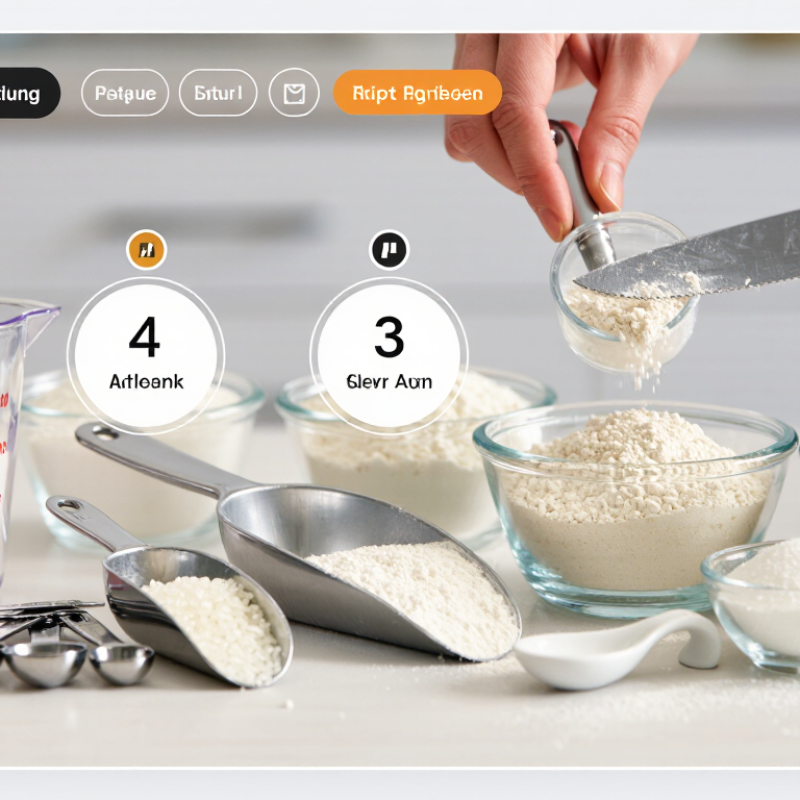
Use China’s metric system: 1 kg equals 1,000 g and 1 L equals 1,000 mL
How to Measure Dry Ingredients Without a Scale: China Guide
China uses the metric system in everyday cooking. One kilogram equals 1,000 grams, while one liter equals 1,000 milliliters. For dry ingredients, use a measuring cup or graduated jug marked in milliliters. A level 15 mL tablespoon and a level 5 mL teaspoon can also provide repeatable portions. Keep the container on a flat surface.
Volume does not equal weight. One milliliter of flour is not one gram of flour. A 250 mL cup may hold about 120 grams of plain flour, 200 grams of granulated sugar, or 185 grams of rice. These figures are practical estimates, not fixed laws. Flour settles differently after storage. Humidity changes it too. Spoon the ingredient gently into the cup, then scrape across the top with a straight edge. Do not pack flour unless the recipe says so.
For a recipe requiring 500 grams of flour, two loosely filled 250 mL cups may be close. Check the texture during mixing. Dough that feels unusually stiff may need less flour next time. I once pressed flour into the cup and produced dry dough, despite following the numbers carefully. That mistake taught me to record both the measuring method and ingredient condition. When precision matters, use a verified conversion chart and repeat the same filling technique. Small kitchen errors can become large in doubled recipes.
How to Measure Dry Ingredients Without a Scale: China Metric Guide
Use China’s metric system: 1 kilogram equals 1,000 grams, and 1 liter equals 1,000 milliliters. The chart shows approximate masses for one 250 mL metric cup of common dry ingredients.
Values are practical kitchen estimates. Actual weight can vary with ingredient variety, particle size, and how tightly the cup is filled.
Select standard cups and spoons: 1 US cup equals 236.6 mL, commonly rounded to 240 mL
How to Measure Dry Ingredients Without a Scale China Guide?
For home baking in China, standard measuring cups and spoons can provide consistent results. One US cup equals 236.6 mL, commonly rounded to 240 mL. This is a volume measure, not a weight measure. A US tablespoon holds about 14.8 mL, while a teaspoon holds about 4.9 mL. NIST conversion guidance supports these volume relationships. USDA FoodData Central also lists household portions beside gram values, showing that flour, sugar, and grains do not share the same density.
Use a dry measuring cup for flour, rice, and sugar. Spoon the ingredient into the cup, then level the surface with a straight knife. Do not press flour down. Compressed flour can add a surprising amount. Granulated sugar usually settles less, but leveling still improves repeatability. In my kitchen, this method works well for pancakes and everyday cakes, yet it is not perfectly precise. Humidity, storage time, and particle size can change the result.
Tips: Check whether the cup marking says 240 mL or 236.6 mL. For small quantities, use level spoons rather than casually filled ones. If a Chinese recipe gives grams, do not automatically replace them with milliliters. Keep one conversion chart nearby, and record your own results. A cup of sifted flour may behave differently from a cup scooped directly from the container.
Measure flour by spoon-and-level using the 120 g-per-cup baking benchmark
When a kitchen scale is unavailable, flour can still be measured with reasonable consistency. For plain flour, use the 120 g-per-cup baking benchmark. Choose a standard measuring cup, not a small rice cup or tea cup. Fluff the flour first, then spoon it gently into the cup. Do not scoop directly from the bag. Scooping compresses the flour and may add 15–25 grams. Level the surface with a straight knife. Keep the knife flat.
Tips:
Keep the cup on a plate while filling it. This catches loose flour. Avoid shaking the cup. Humidity also changes texture, especially during China’s rainy seasons. If flour looks packed, loosen it with a clean spoon before measuring. Write the measured amount beside the recipe.
This method works well for cakes, pancakes, and many everyday bakes, but it is not perfectly exact. I once measured a full cup too quickly and produced dry cookies. The flour had settled overnight. A second check helped. For better results, compare the dough’s texture with the recipe description. It should usually look soft, cohesive, and slightly moist, not stiff or dusty. Different flour types can also vary in density, so the 120 g benchmark should guide you, not control every decision.
Adjust volume conversions by ingredient density: sugar is about 200 g per cup
How to Measure Dry Ingredients Without a Scale: China Guide
When measuring dry ingredients in China, volume is only an estimate. A cup does not hold the same weight for every ingredient. Granulated sugar is a useful example. USDA FoodData Central lists approximately 200 grams per US cup, depending on crystal size and packing. A metric cup holds 250 milliliters, while a US cup holds about 237 milliliters. The difference seems small, but it can affect cakes and sauces.
Sugar has a fairly stable texture, so one level cup usually approaches 200 grams. Spoon sugar into the cup, then scrape the top with a straight knife. Do not press it down. A packed cup may contain noticeably more sugar.
A Chinese kitchen measuring cup may also use 250 milliliters, so check its markings before converting. For half a cup, begin near 100 grams. For one tablespoon, use roughly 12–13 grams.
Flour behaves differently.
Its weight changes with sifting, humidity, and compression. Professional baking references commonly place all-purpose flour near 120–130 grams per cup, not 200 grams. I have found that scooping directly from a flour bag creates inconsistent results. That method is convenient, but unreliable. A better approach is filling gently and leveling carefully. Still, these figures are not laboratory values. Ingredient density varies, and household cups are rarely perfectly standardized. When a recipe seems unusually sweet or dry, question the conversion before blaming the oven.
Reduce errors by repeating measurements and keeping volume variation below 5%
How to Measure Dry Ingredients Without a Scale: China Guide
Measuring dry ingredients without a scale requires a consistent volume method. In China, measuring cups may hold 240 or 250 milliliters, so check the capacity first. Use the same cup and spoon throughout one recipe. For flour, rice, starch, or sugar, loosen the ingredient before filling the cup. Spoon it in gently, then level the surface with a straight knife. Do not tap the cup. Tapping compresses the ingredient and changes the amount. Small differences matter.
Tips: Repeat each measurement three times and record the results. Calculate variation with this simple formula: (highest volume minus lowest volume) ÷ average volume × 100. Keep the result below 5%. If the variation is higher, loosen the ingredient and measure again. A clean, dry cup improves reliability. Read the markings at eye level, especially with partial cups or spoons.
In my kitchen tests, flour showed the greatest variation when scooped directly from a container. Spoon-and-level measurements were more stable. Granulated sugar was easier, but settling still caused small changes. For dense ingredients, a gentle fill works better than shaking. I sometimes repeat a measurement unnecessarily, but that extra check reveals weak habits. Volume methods cannot match a precise scale every time. Still, careful repetition can produce dependable results for everyday cooking.
How to Measure Dry Ingredients Without a Scale China Guide? - Reduce errors by repeating measurements and keeping volume variation below 5%
Metric kitchen-volume references used in China: 1 cup = 250 mL, 1 tablespoon = 15 mL, and 1 teaspoon = 5 mL. The gram values below are typical estimates because ingredient density changes with particle size, moisture, and packing.
| Dry Ingredient |
Typical Bulk Density
(g/mL) |
250 mL Cup
(g) |
15 mL Tablespoon
(g) |
5 mL Teaspoon
(g) |
Recommended Volume-Measuring Method |
| All-purpose flour |
0.50–0.57 |
125–143 |
7.5–8.6 |
2.5–2.9 |
Spoon flour into the cup, avoid pressing, then level with a straight edge. |
| Granulated sugar |
0.80–0.88 |
200–220 |
12.0–13.2 |
4.0–4.4 |
Fill the measure evenly and level it; do not compress unless the recipe specifies packed sugar. |
| White rice |
0.75–0.85 |
188–213 |
11.3–12.8 |
3.8–4.3 |
Pour gently into the measure and level the surface without shaking or tapping the container. |
| Rolled oats |
0.30–0.38 |
75–95 |
4.5–5.7 |
1.5–1.9 |
Scoop loosely and level; avoid pressing flakes down because packing changes the amount considerably. |
| Cornstarch |
0.50–0.60 |
125–150 |
7.5–9.0 |
2.5–3.0 |
Stir or loosen before spooning, then level gently without tapping the measure. |
| Unsweetened cocoa powder |
0.35–0.45 |
88–113 |
5.3–6.8 |
1.8–2.3 |
Break up lumps, spoon into the measure, and level without compacting the powder. |
| Fine table salt |
0.90–1.20 |
225–300 |
13.5–18.0 |
4.5–6.0 |
Use a dry, level spoon; crystal size and moisture can cause noticeable density differences. |
Accuracy rule: Repeat the same volume measurement at least three times. Calculate variation as
(maximum reading − minimum reading) ÷ average reading × 100%.
Keep the result below 5% for a consistent no-scale measurement process.
Repeat-Measurement Control Table
| Ingredient |
Repeat 1
(estimated g) |
Repeat 2
(estimated g) |
Repeat 3
(estimated g) |
Average
(g) |
Variation
(%) |
| All-purpose flour |
128 |
124 |
126 |
126.0 |
3.17% |
| Granulated sugar |
207 |
211 |
209 |
209.0 |
1.91% |
| White rice |
194 |
201 |
197 |
197.3 |
3.55% |
| Rolled oats |
82 |
86 |
84 |
84.0 |
4.76% |
The repeat values are a calculation example showing how to verify consistency. They are not a substitute for ingredient-specific laboratory weighing. For best results, use the same container, spooning technique, fill level, and room conditions for every repeat.
Standardized No-Scale Procedure
| Step |
Action |
Control Point |
Reason for Error Reduction |
| 1 |
Stir or loosen the dry ingredient. |
Break up clumps without grinding or compressing the ingredient. |
Reduces density differences caused by settling and lumps. |
| 2 |
Spoon the ingredient into a dry measuring cup or spoon. |
Do not scoop directly from a deep container when measuring powders. |
Limits packing and prevents excess material from entering the measure. |
| 3 |
Fill to slightly above the rim and level with a straight edge. |
Keep the leveling motion horizontal and consistent. |
Creates a repeatable reference volume. |
| 4 |
Repeat the measurement three times. |
Use the same cup, spoon, surface, and technique each time. |
Reveals technique variation before the ingredient is added to a recipe. |
| 5 |
Calculate the percentage variation. |
Target: below 5%; repeat the process if the result is 5% or higher. |
Provides a practical consistency check without using a scale. |
Conclusion
Learning how to measure dry ingredients without a scale is simple when you combine China’s metric system with consistent volume tools. In China, 1 kilogram equals 1,000 grams, while 1 liter equals 1,000 milliliters. A standard US cup holds approximately 236.6 milliliters, usually rounded to 240 milliliters, and measuring spoons can help with smaller quantities. Choose level, standard-sized cups and spoons rather than using random household containers.
For flour, use the spoon-and-level method: gently spoon flour into the cup, avoid packing it down, and scrape across the top to remove excess. A useful baking benchmark is about 120 grams of flour per cup. Because ingredients have different densities, adjust your expectations; sugar, for example, weighs about 200 grams per cup. Repeat measurements when accuracy matters and aim to keep differences between measurements below 5 percent for more reliable results.

 Fergus Kitchen