7 Best Reasons Your Dishwasher Is Not Drying Properly?

Time:2026-09-24 Author:Sophia
0%

A dishwasher that leaves wet plates, cloudy glasses, or water pooled inside can make an ordinary kitchen task frustrating. If you keep asking, “why is my dishwasher not drying dishes properly,” the answer may not be a single failed part. Drying depends on heat, airflow, drainage, detergent, loading, and the selected cycle.

Doug Rogers, an appliance-repair expert and president of Mr. Appliance, explains, “A dishwasher cannot dry well when heat, airflow, or drainage is missing.” That simple point matters. A blocked vent may trap steam against the door. Plastic containers may still hold droplets after a normal cycle. A low-temperature or quick-wash setting can also leave dishes damp. Sometimes, the machine is working normally, but expectations are too high.

Still, that explanation is incomplete. A failing heating element, broken thermostat, worn rinse-aid dispenser, or restricted drain can create the same symptom. Look closely. Is the interior warm when the cycle ends? Are dishes loaded too tightly? Does water remain beneath the filter? These small clues can separate a loading mistake from a repair issue.

This guide examines seven practical reasons your dishwasher is not drying properly. It connects visible symptoms with likely causes and sensible checks. You will also learn when a simple adjustment may help and when professional service is more appropriate. The goal is not to guess blindly. It is to understand what your dishwasher is showing you, even when the evidence seems confusing.
7 Best Reasons Your Dishwasher Is Not Drying Properly?

How a Dishwasher’s Drying Cycle Works

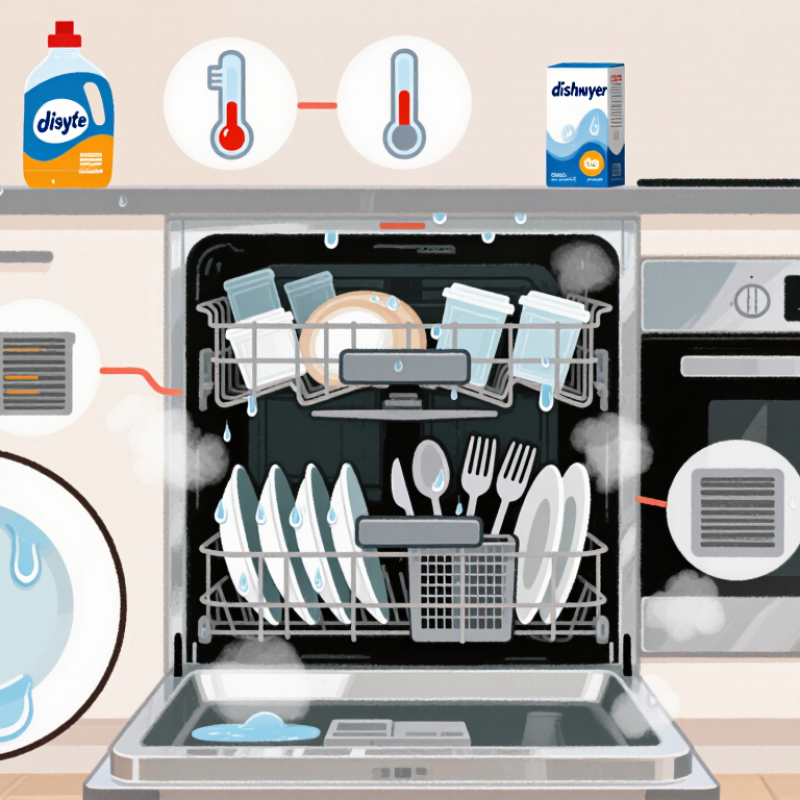
A dishwasher’s drying cycle begins after the final rinse. The machine uses residual heat to evaporate water from warm dishes. Many models also use a heating element, a vent, or a fan. Moist air must escape through the vent. Otherwise, it settles back onto the dishes as droplets. This explains why a clean load can still feel wet.

Several problems interrupt this process. An overloaded rack blocks airflow around plates and bowls. Plastic containers cool quickly, so they often remain damp. A blocked vent traps steam inside the tub. Low rinse-aid levels can also leave water clinging to glass and metal surfaces. Some energy-saving cycles use less heat and require more time. Opening the door too early releases useful heat. A failed heating element, thermostat, or fan needs professional testing.

During appliance checks, I have noticed that loading habits cause more drying complaints than expected. Large items placed near the vent can quietly change the whole cycle. Check the vent area and leave space between dishes. Use the recommended rinse aid, even when the dishes look clean without it. One detail is easy to miss: water temperature matters before the cycle starts. If incoming water is too cold, the final rinse may not provide enough heat. I once blamed the drying system too quickly; the real issue was a half-blocked vent. Testing one change at a time gives clearer evidence.

How the drying cycle works: A typical cycle moves from washing and rinsing to a hot final rinse, then drying. The final rinse warms the dishes; moisture evaporates and may condense on the cooler tub walls. The exact sequence varies by model. Poor drying can result from a cool or interrupted cycle, plastic items that retain water, overcrowding, blocked airflow, a disabled rinse aid dispenser, or a drying-system fault.

Seven Common Causes of Poor Dishwasher Drying

Seven Common Causes of Poor Dishwasher Drying

Poor drying usually has seven practical causes: low rinse-aid levels, an overloaded rack, blocked vents, a dirty filter, cool incoming water, a weak heating element, or the wrong cycle setting. Plastic containers stay wet because they retain less heat than glass or ceramic. A crowded rack also traps water under bowls and inside cups. According to ENERGY STAR product criteria, efficient dishwashers use no more than 3.2 gallons per standard cycle. That efficiency can reduce heat exposure, especially when energy-saving drying is selected. The U.S. Department of Energy’s test procedures also evaluate drying performance under controlled conditions, not in every household’s real environment.

Technicians often inspect the filter and vent before replacing expensive parts. A greasy filter can restrict circulation, while a blocked vent leaves steam on the door. If the heating element remains cold after a hot cycle, professional testing is safer than guessing.

Water entering below about 120°F may also weaken drying results. That assumption is often missed. I have found that many “broken” machines only needed rinse aid and better loading. Still, persistent moisture may indicate a failed thermostat, fan, or heating circuit.

Tips: Refill rinse aid, leave space between dishes, and place plastics on the upper rack. Open the door slightly after the cycle ends, if the manual permits it. Check the filter weekly when washing heavily soiled dishes. Never cover the vent or place tall items directly in front of it.

How to Check the Rinse Aid and Drying Settings

How to Check the Rinse Aid and Drying Settings

When dishes come out wet, check the rinse aid dispenser before assuming the dishwasher has failed. Open its cap and look for the fill line. If the reservoir is low, refill it with dishwasher rinse aid, then wipe away any spills.

Rinse aid helps water slide off glass and plate surfaces instead of forming droplets. Results can vary with water hardness and the load. A cloudy glass is not always proof that the dispenser is empty.

Next, check the selected cycle and drying options on the control panel. Some cycles use less heat or skip heated drying to save energy. A quick cycle may leave plastic containers damp, since plastic holds less heat than ceramic.

If your model has a heated-dry or extended-dry option, try it with a normal load. Check the owner’s manual for setting names and dispenser instructions. I once blamed the cycle, then noticed I had selected an energy-saving option by mistake.

Tips:

Place cups and bowls at an angle so water can drain. Keep tall items from blocking the detergent or rinse aid dispenser. After the cycle, open the door slightly if your manual allows it. Still seeing pooled water? Check that dishes are not nested together, and note whether the problem affects every load or only certain items.

How to Inspect the Heating Element, Fan, and Vent

When dishes stay wet, inspect the heating element, fan, and vent before assuming the dishwasher needs replacing. Turn off power at the breaker first. The element is usually a metal loop on the tub floor. Look for cracks, blistering, or dark burn marks, but do not touch it until fully cool. A multimeter can check continuity; a failed reading may indicate a break, though the model’s service information should guide the test. Not every dishwasher uses an exposed element for drying.

Check the vent for trapped food or mineral buildup. It should open freely during the drying cycle. If your unit has a drying fan, listen for it near the end of the cycle; silence alone does not prove failure, but a blocked grille or damaged fan deserves attention. ENERGY STAR’s dishwasher criteria set a maximum of 3.2 gallons per cycle for standard-size certified models, a useful efficiency benchmark, not a guarantee that every load will emerge bone-dry. The U.S. Department of Energy’s test procedures measure energy and water use under controlled conditions, so household results can differ. Plastic containers often retain droplets. It’s frustrating, and I would check loading and rinse-aid settings before ordering parts. If electrical testing is unfamiliar, stop and call a qualified technician.

Step-by-Step Solutions and When to Call a Technician

When dishes come out wet, check the simple causes before scheduling a repair. Open the dishwasher after the cycle and confirm the heated-dry or sanitize setting was selected; some cycles leave more moisture behind. Rinse-aid helps water slide off glass and plates, so refill the dispenser if it is empty. Don’t overfill it. Load cups and bowls at an angle, with plastic items on the upper rack, and keep tall pans from blocking the spray arms. A small loading mistake can matter.

Next, inspect the filter for food debris and clean it according to the owner’s manual. Check that the spray arms turn freely, then run a hot cycle with a normal load. If the tub stays cool, drying performance may suffer; avoid touching heating elements, which can remain hot. Give the cycle time to finish, and crack the door slightly afterward if the manual allows it. This helps steam escape. I’ve seen one crowded rack make the whole machine seem faulty, though that isn’t always the answer.

Call a qualified appliance technician if dishes remain wet after these checks, the cycle stops early, or you notice burning smells, leaks, unusual noises, or a tripped breaker. Stop using the dishwasher if there is a burning odor or water near electrical parts. A technician can test the heating system, thermostat, fan, and controls safely. Note the cycle selected and what you observed; those details can make diagnosis quicker.

7 Best Reasons Your Dishwasher Is Not Drying Properly? - Step-by-Step Solutions and When to Call a Technician
Reason Common Signs What to Try When to Call a Technician
1. Rinse aid is empty or set too low Water droplets remain on dishes, especially glassware; drying may be worse in humid conditions. Fill the rinse-aid dispenser and check the appliance manual for the correct dosage setting. Rinse aid helps water run off surfaces rather than forming droplets. Call if the dispenser is damaged, leaks, or will not release rinse aid after you have checked its settings.
2. A cycle or drying option does not provide enough heat Dishes are cool and wet at the end of a short, eco, or air-dry cycle. Select a full cycle with a heated-dry option, if available. Check the manual to confirm which cycles include heated drying. Call if a suitable heated-dry cycle is selected but the dishes remain cold and wet after repeated runs.
3. Dishes are loaded in a way that traps water Water pools on cup bases, bowls, or items placed close together; spray arms may be obstructed. Angle cups and bowls so water can drain. Leave space between items, avoid nesting dishes, and make sure nothing blocks the spray arms. Call if the spray arms do not rotate freely or appear damaged after you have removed any visible obstruction.
4. Plastic items retain moisture Plastic containers and lids are wet while glass, metal, or ceramic dishes are mostly dry. Place plastic items on the upper rack when permitted by the manual, angle them to drain, and remove them promptly after the cycle. Plastic alone remaining wet usually does not indicate a fault. Call if other dish types are also consistently wet after basic checks.
5. The incoming water is not hot enough Drying and cleaning may be poor, or the dishwasher may use more time to heat the water. Run the hot-water tap at the sink until the water is warm before starting the dishwasher. Check the manual for the recommended incoming-water temperature. Call a qualified technician if the dishwasher still does not heat as expected or if you suspect a heating-system fault. Do not open electrical panels.
6. The filter or spray system is obstructed Food residue remains on dishes, spray coverage seems weak, or water collects in the filter area. Turn the appliance off and clean the removable filter as directed in the manual. Check that spray-arm openings are not clogged and that the arms can turn freely. Call if the filter is damaged, the spray arms remain blocked after cleaning, or the dishwasher has drainage problems.
7. A heating element, fan, vent, or control component has failed Dishes remain cold and wet despite correct loading, rinse aid, and cycle settings; drying performance may suddenly worsen. Check the manual for user-accessible vent areas and keep them clear. Do not remove panels or test electrical components yourself. Arrange professional service if the appliance repeatedly fails to heat or ventilate, displays an error code, trips a breaker, or shows signs of electrical damage.

FAQS

What should I check first when dishes come out wet?

Confirm that heated-dry or sanitize was selected. Refill the rinse-aid dispenser if needed, but don’t overfill it.

How should I arrange dishes for better drying?

Angle cups and bowls so water can drain. Put plastic containers on the upper rack, and keep tall pans clear of the spray arms.

Can a dirty filter affect drying?

Yes. Remove food debris and clean the filter according to the owner’s manual. Small scraps can disrupt a wash.

What should I inspect on the heating element?

Turn off power at the breaker and let the element cool completely. Look for cracks, blisters, or dark marks. Don’t touch it.

How can I check the vent or drying fan?

Look for food or mineral buildup blocking the vent. A fan may be quiet, so silence alone doesn’t prove it has failed.

What if the dishwasher tub stays cool?

Drying may suffer if the tub stays cool. Avoid touching the element; it can remain hot after a cycle.

Is it safe to test the element with a multimeter?

A multimeter can check continuity, but the correct test depends on the dishwasher model. If electrical testing feels unfamiliar, stop and call a qualified technician.

When should I stop using the dishwasher?

Stop if you smell burning or find water near electrical parts. Call a qualified technician, especially after a tripped breaker or unusual noise.

Can opening the door help dishes dry?

If the manual allows it, crack the door slightly after the cycle so steam can escape. Plastic items may still hold droplets.

Conclusion

If you are wondering, “why is my dishwasher not drying dishes properly,” the problem may involve several parts of the drying cycle. After the final rinse, the dishwasher uses heat, airflow, and evaporation to remove moisture. Poor results can be caused by low rinse aid, an unsuitable drying setting, overcrowded racks, incorrect dish placement, or plastic items that naturally retain water. A blocked vent or a malfunctioning fan can also prevent moist air from escaping.

Start by checking and refilling the rinse aid dispenser, then select an appropriate heated or extended drying option if available. Make sure dishes are spaced apart and positioned so water can drain easily. For further inspection, allow the dishwasher to cool before examining the heating element, fan, and vent for visible damage, residue, or obstruction. If these steps do not improve performance, or if the appliance does not heat or circulate air, contact a qualified technician for safe testing and repair.

Sophia

Sophia

Sophia is a dedicated marketing professional with an exceptional depth of knowledge about her company's products and services. With a keen understanding of market trends and customer needs, she crafts insightful blog posts that not only inform but also engage readers, enriching the company’s online......