When a pan sits on the glass but the burner stays dark, it is easy to suspect a broken cooktop. Often, the cause is simpler. Induction models need cookware with a magnetic base, and some also require a minimum pan diameter. A stainless-steel label alone does not guarantee compatibility; pan construction varies. Try a small magnet on the underside. If it clings firmly, the pan is more likely to work, though your appliance manual is the best guide.
If you are wondering, “why is my induction cooktop not detecting pans,” check the pan’s position, size, and base before assuming the unit has failed. Center it on the marked cooking zone, and make sure the bottom is flat and dry. Look for an error code or a flashing indicator, since meanings differ by model. Turn the cooktop off before wiping the surface, and avoid testing cookware on a cracked or damaged unit. Small details matter. A pan that worked yesterday may not be recognized if it has shifted, overheated, or been replaced with a different base. These checks do not diagnose every fault, and that is worth admitting. If compatible cookware still goes undetected, consult the manufacturer or a qualified appliance technician rather than opening the cooktop yourself.
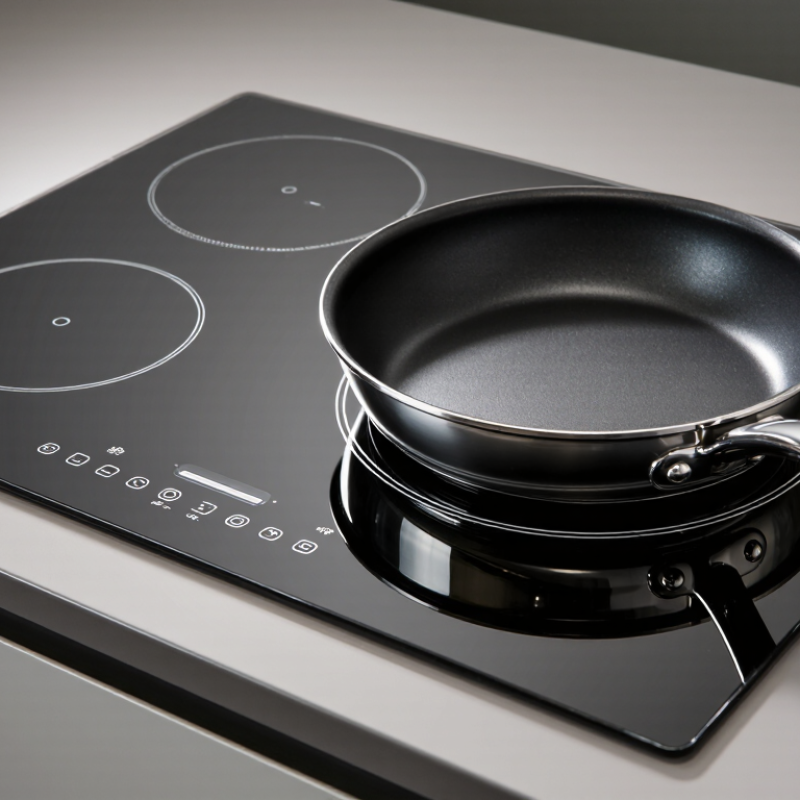
An induction cooktop does not heat a pan with a flame or a hot burner. A coil beneath the glass creates a changing magnetic field. When a compatible pan sits above it, the pan’s magnetic base interacts with that field and generates heat. The cooktop senses this interaction through changes in the coil’s electrical behavior. It can then decide whether a pan is present and suitable for heating. The exact detection threshold varies between cooktop models.
The base matters more than the pan’s appearance. Cast iron and many magnetic stainless-steel pans usually work, while plain aluminum, copper, and glass typically do not. Some pans made from these materials have a magnetic layer underneath. A magnet can offer a quick check: if it sticks firmly to the base, the pan is more likely to work. Still, that test is not a guarantee. A very small base, an uneven bottom, or a pan sitting off-center may prevent reliable detection. I used to assume any stainless-steel pan would work; that shortcut can be misleading.
An induction cooktop may show a flashing symbol or beep when it cannot recognize a pan. The common cause is a nonmagnetic base: aluminum, copper, and some stainless-steel pans may not work. The U.S. Department of Energy’s Energy Saver guidance estimates induction transfers about 85% of its energy to cookware, compared with about 32% for gas. That efficient transfer depends on a suitable magnetic pan base.
Try a simple magnet test. If a magnet will not cling firmly to the pan’s underside, the cooktop may not detect it. Size matters, too. A small pan on a large zone, or a pan placed off-center, can fall below the hob’s detection threshold. Oddly, a pan may pass the magnet test and still fail if its base is warped or too narrow. Check the cooktop manual for minimum pan diameter.
Keep the glass and pan base dry and clean; spilled water or burnt food can interfere with contact and cause uneven positioning. Lift the pan, wipe both surfaces, and center it again. Still no response? Test a known compatible pan on another zone. If several suitable pans remain undetected, the issue may be a sensor or control fault. A technician can diagnose that safely. It is easy to blame the pan too quickly.
Typical pan compatibility with induction cooking
Induction cooktops need a magnetic pan base. Cast iron and magnetic stainless steel are usually compatible; aluminum, copper, glass, and ceramic pans generally are not unless they have a magnetic base. A compatible pan may still go undetected if it is too small for the cooking zone or is not centered. Check your cooktop manual for its requirements.
An induction cooktop detects cookware through a magnetic field, so a pan can look suitable and still fail the test. Check the base with a magnet: it should cling firmly across the cooking area, not just at one small spot. Then check the pan’s label or care guide for induction compatibility. A warped, very small, or uneven base may not couple reliably, even when it is magnetic. That detail is easy to miss.
Next, center the pan over the marked ring and make sure its base sits flat. Lift it, wipe away crumbs or moisture, and set it down again. Debris or a tilted pan can shift it off-center. Use a cooking zone that matches the pan’s base diameter; some cooktops will not activate if the pan is too small or partly outside the detection area. If detection changes when you reposition it, placement may be the issue. It is tempting to blame the cooktop too soon, but these simple checks are easy to skip.
Tips: Test with another compatible pan, and try the same pan on a different zone. If neither works, consult the cooktop manual before assuming the appliance is faulty. Stop using a pan with a badly warped base.
Turn the cooktop off and let the glass cool. Lift the pan rather than sliding it. Check that its base is clean, dry, and flat; even a thin layer of residue can interfere with contact. Center the pan over the cooking zone, then test its base with a magnet. If the magnet does not cling firmly, the cookware may not be induction-compatible. A small pan can also fall below the zone’s detection range. Try a larger, compatible pan before assuming the cooktop has failed.
The U.S. Department of Energy’s Energy Saver guidance estimates that induction transfers about
85% of its energy to food, compared with roughly 32% for gas.
That figure describes heating efficiency, not sensor accuracy, but it reflects how directly induction relies on the cookware. Still no detection? Switch the unit off at its controls, wait briefly, and restart it according to the manual. Remove foil or other objects from the cooking surface. Avoid opening the appliance or bypassing its sensors. It is easy to blame the electronics too early. If a known-compatible pan remains undetected, or an error code appears, stop testing and contact a qualified service technician. Don’t guess.
An induction cooktop that fails to detect a pan may have a simple cause, but repeated failures deserve attention. Before arranging a repair, check that the pan has a magnetic base and sits flat in the center of the cooking zone. Let the surface cool, then wipe away spills or moisture. A damp ring can interfere with contact. Check the cooktop’s manual for reset instructions, too.
Call a qualified cooktop repair technician if several compatible pans go undetected, especially after a power reset. Persistent error codes, controls that stop responding, or a zone that cuts out while heating also need professional assessment. Stop using the cooktop if you notice a cracked glass surface, a burning smell, unusual buzzing, or a breaker that trips repeatedly. Don’t remove the panel or probe wiring; internal parts can retain electrical charge.
A technician can inspect the pan sensor, induction coil, wiring, and control board, then identify whether a part has failed. Note which zones are affected and when the problem occurs. That small detail can help. It may still be the cookware, not the cooktop, and guessing can waste time. If the fault comes and goes, describe exactly what you saw rather than waiting for a complete failure.
The pan may not have a magnetic base. Aluminum, copper, and some stainless-steel pans may not work. Looks can fool you.
Hold a magnet against the underside. It should cling firmly across the cooking area, not just one small spot. Check the pan’s care guide, too.
Yes. A pan may be too small for the cooking zone or placed off-center. Match the base to the marked ring and center it.
Yes. Let the surface cool, then wipe the glass and pan base dry. Remove crumbs or burnt food, and set the pan down flat. Small details matter.
Its base may be warped, too narrow, or uneven. Try the pan on another zone, then test a known compatible pan. A magnet test alone is not conclusive.
If several compatible pans fail on multiple zones, check the manual for reset instructions. Persistent error codes or unresponsive controls need professional assessment. It may still be the cookware.
Stop if the glass is cracked, you smell burning, hear unusual buzzing, or the breaker trips repeatedly. Contact a qualified repair technician. Do not open the panel.
Note which zones are affected and when the problem happens. Mention any error codes and whether repositioning changes detection. That small record can help. It is easy to overlook.
If you’re wondering, “why is my induction cooktop not detecting pans,” the answer usually involves how the cooktop senses compatible cookware. Induction models create a magnetic field that works with suitable pans placed correctly over the cooking zone. Detection can fail if a pan’s base is not magnetic, is too small, sits off-center, or does not make stable contact with the surface. Moisture, residue, or an unsuitable pan shape may also interfere.
Start by checking the pan with a magnet and confirming that its base matches the cooking zone’s size. Center it on a clean, dry surface, then try another compatible pan to see whether the issue continues. You can also switch the cooktop off, allow it to cool, and restart it, following the appliance instructions. Avoid opening or repairing internal components yourself. If several suitable pans remain undetected or the controls behave unusually, stop using the cooktop and contact a qualified repair professional.

Fergus Kitchen